Understanding Inverter Types for Solar Panel Installation in Madipakkam
Technical guide · 22 October 2026 · 7 min read
The inverter converts DC power from the solar panels into 230V AC power your home can use. For solar panel installation in Madipakkam, the choice of inverter type affects both upfront cost and how the system handles partial shading — which matters on most south Chennai rooftops.
String inverter: the standard choice
A string inverter connects all the panels on one roof section in series (a string) and processes their combined DC output. For a fully unshaded, south-facing terrace — which is common in Madipakkam independent houses — a string inverter is the most cost-effective and reliable option. It has one point of failure, one warranty to manage, and straightforward monitoring. A quality Tier-1 string inverter from Solis, Growatt, Goodwe, or SMA is the right choice for 80% of residential solar panel installation in Chennai.
The shade problem with string inverters
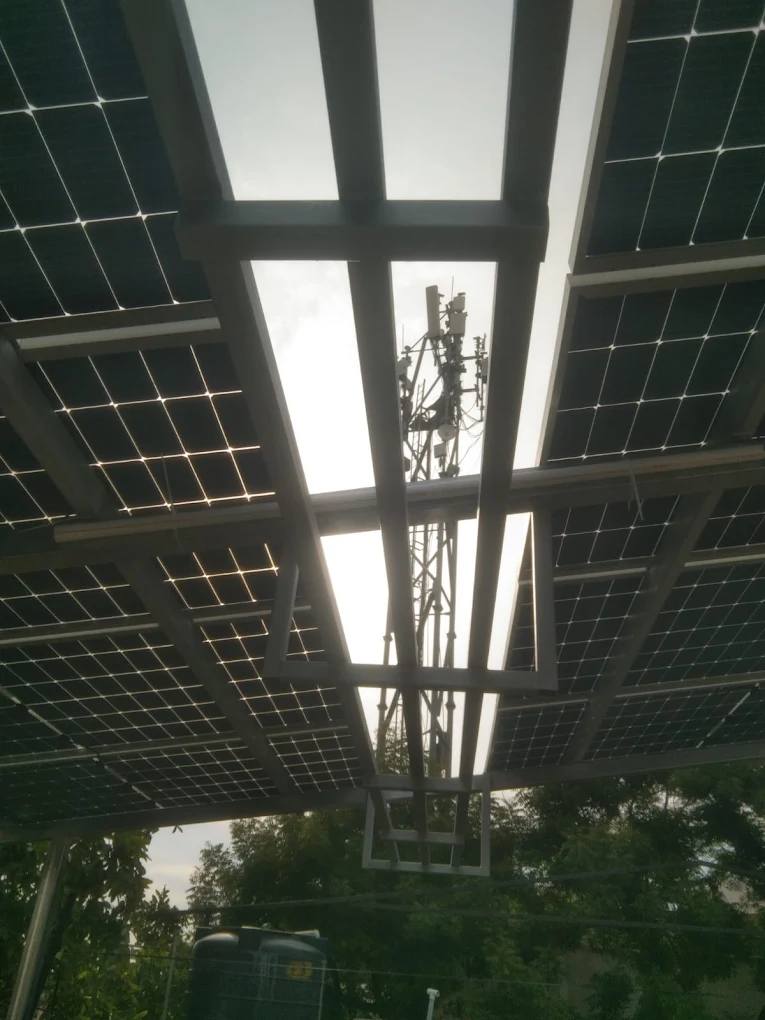
In a string, the panel with the lowest output limits the whole string. If one panel gets shadow — from a water tank, a staircase head, or a neighbour's parapet — that one shaded panel pulls down generation from every other panel in the string. This is the main limitation of a pure string design. For many Madipakkam terraces, careful layout avoids this by keeping the array out of shade. The site survey should map shadow throughout the day before the string design is finalised.
Power optimisers: panel-level MPPT on a string
A power optimiser attaches to each panel individually and allows each one to operate at its own maximum power point. The optimised DC strings still feed a central string inverter. This reduces the shade loss problem: a shaded panel only hurts itself, not the whole string. Power optimisers add roughly ₹8,000–₹15,000 to the cost of a 3–5 kW solar panel installation in Chennai, depending on the brand. They make sense when the layout has unavoidable partial shade on some panels.
Microinverters: panel-level AC conversion
A microinverter attaches to each panel and converts DC to AC at the panel itself. The system produces AC from each panel independently. Microinverters eliminate string shade loss entirely and make panel-level monitoring easy. The cost premium is significant — often 20–30% more than a string inverter system of the same kW for solar panel installation in Madipakkam. They are worth considering on complex rooftops with multiple orientations or significant unavoidable shade, but not for a clean, unshaded south-facing terrace.
What to check on the inverter specification
Whatever inverter type is selected, confirm: IP65 or IP66 outdoor rating (Chennai's humidity demands it), monitoring app compatibility, warranty period (5 years minimum), and whether the inverter is 'battery-ready' if you plan to add storage later. A grid-tied inverter without a battery port cannot be easily upgraded to hybrid. For solar panel installation in Chennai through ZeroEB, the inverter specification is part of the written quote — not an afterthought decided on installation day.