
Solar Panel Installation in Madipakkam: Roof Load and Structural Check
Installation guide · 20 October 2026 · 6 min read
Before any solar panel installation in Madipakkam, the roof needs to be evaluated for structural suitability. For most newer independent houses with RCC flat roofs, this is a quick check. For older buildings, or those with visible cracks or previous water damage, it needs more attention.
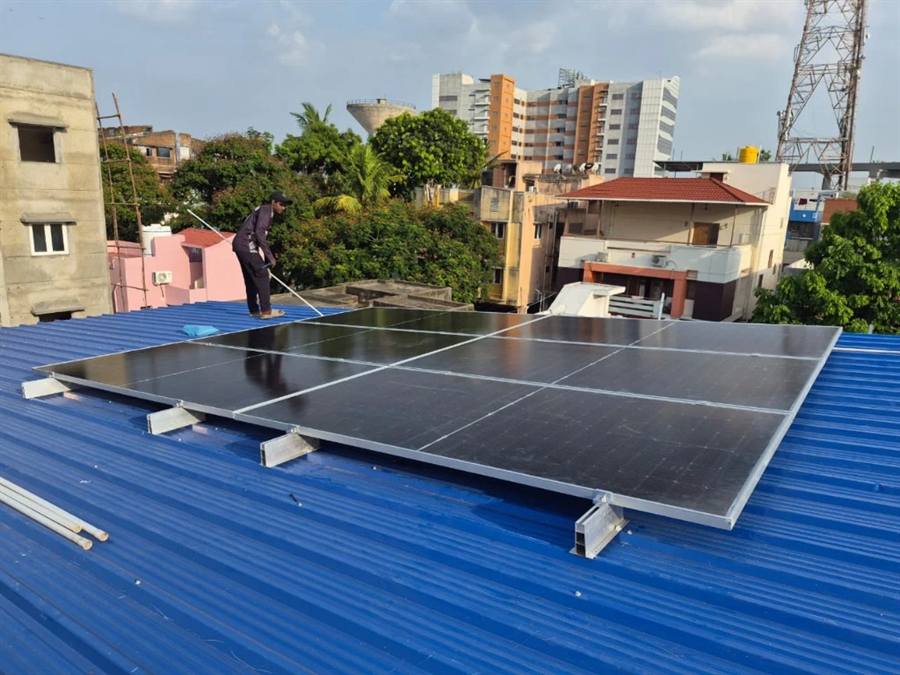
How much does a solar system weigh?
A standard 400W solar panel weighs 20–22 kg. A 3 kW system uses six to eight panels, adding 130–175 kg of panel weight to the terrace. The mounting structure — usually galvanised steel channels and bolts — adds another 80–120 kg. Total dead load for a typical 3 kW system is 200–300 kg, spread over 25–35 sq metres. Distributed over that area, the load is well within the design capacity of a standard RCC terrace slab (which is typically designed for 150–200 kg/sq metre live load).
When load capacity is a concern
An RCC slab less than 20 years old with no visible cracking handles solar dead load without issue in almost all cases. Concerns arise when: the slab is more than 30 years old and has visible cracking or rust-staining from rebar corrosion; the terrace already carries heavy equipment (water tanks, old AC condensers, stored materials); the building has had obvious differential settlement (door frames out of alignment, stair cracks). In those cases, a structural engineer's assessment is worth the cost before installation begins.
How roof penetrations are made
For solar panel installation in Chennai, the mounting structure uses either surface-mounted feet (which sit on the slab and are ballasted down with the structure weight) or anchor bolts drilled into the slab. Surface-mounted systems avoid penetrations entirely and are common on waterproofed terraces. Anchor bolt systems distribute load through the slab and are preferred for wind-exposed terraces. The installer should specify which system they are using and why, based on the site visit.
Wind load on Chennai rooftops
Chennai is in Wind Zone III under Indian Standards, with basic wind speed of 50 m/s. Solar panel installation in Madipakkam and south Chennai should use structure fixings rated for this wind zone. The mounting structure should be designed with the panels' wind uplift in mind — not just the dead load. A site visit from a qualified installer will check the parapet height (which provides shielding) and the exposure level (a top-floor terrace is more exposed than a mid-building terrace).
What to do if concerns are found
If the site survey identifies a slab issue, the options are: address the slab issue first (crack repair, carbonation treatment), reduce system size to lower load, or switch to a ballasted structure that avoids drilling. For most Madipakkam independent houses built in the last 20 years, none of these apply. The survey is still the right first step — a free site inspection is part of the quote process for solar panel installation in Chennai through ZeroEB. Request a site visit or call +91 9042517415.