
What Happens the Day After Solar Panel Installation in Madipakkam
Installation guide · 1 November 2026 · 6 min read
Solar panel installation in Madipakkam ends when the final connection is made and the inverter is switched on. What happens in the following days sets up whether the system actually performs as the quote promised.
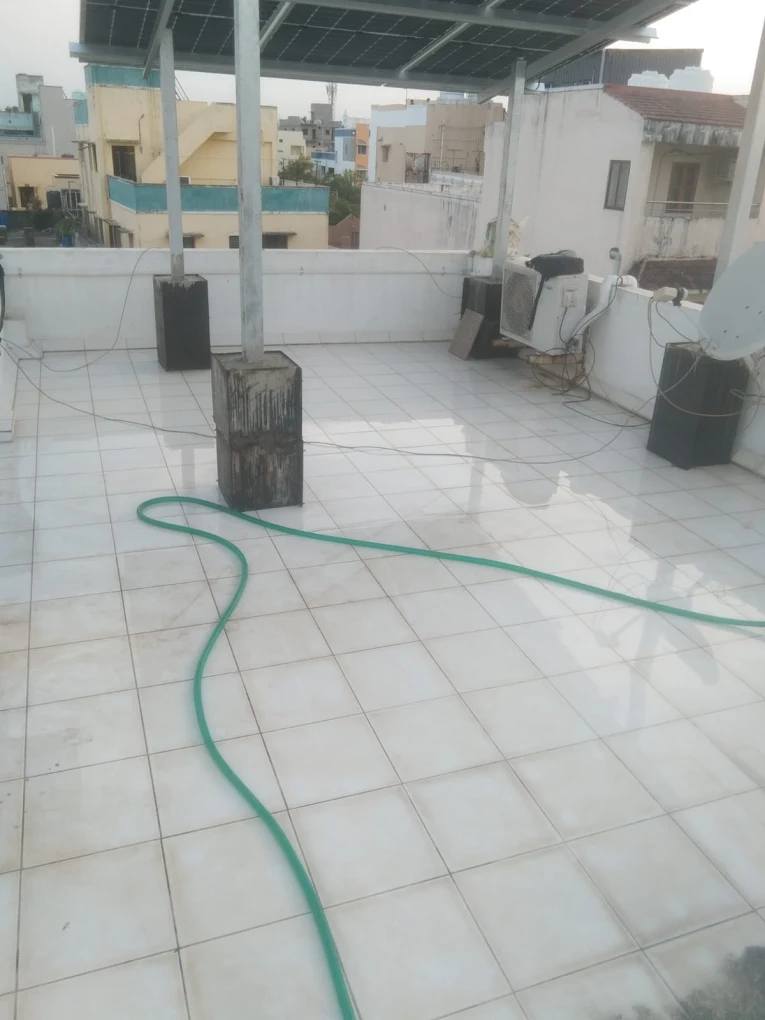
Commissioning tests on the final day
Before the crew leaves, the installation should be tested. This includes: DC open-circuit voltage measured at the inverter input (should match the string design), polarity confirmed correct, earth continuity tested, surge protection devices verified, and the inverter brought through its startup sequence. If the system has a monitoring unit, the data logger should be paired with the monitoring app before the team departs. These are not optional extras; they are the difference between an installation and a working plant.
What the inverter display tells you
On a clear morning in Chennai, a 3 kW plant should show generation starting shortly after sunrise and peaking around 11 AM to 1 PM. By noon in October or November, 2.5–3 kW of live output is normal. If the peak output is significantly lower — say, 1.5 kW — in the first week of clear weather, raise it with the installer before concluding anything. It may be a monitoring calibration issue, an inverter setting, or shade that was not visible during the site visit.
Net meter application timeline
For solar panel installation in Madipakkam, the TANGEDCO net meter application should be submitted on the day of installation or within two working days. The installer needs: a copy of the EB bill, the recent sanctioned load letter, the inverter datasheet, and an installation photograph. TANGEDCO typically acknowledges the application within a week and schedules the meter swap within three to eight weeks depending on the sub-division backlog.
What normal looks like in the first month
A 3 kW system in Chennai during October and November generates roughly 280–340 units per month. November is part of the northeast monsoon; some overcast days will show low output (even under 0.5 kW on a heavy cloud day). This is seasonal and expected. Tracking daily generation through the monitoring app gives a quick sense of whether the system is performing as designed. How solar reduces the EB bill gives example monthly numbers.
Who to call if something looks wrong
For solar panel installation in Chennai through ZeroEB, the same team that installed the system handles follow-up. Call +91 9042517415 with the inverter error code (displayed on the unit) and a photo. Most early-stage issues are either monitoring setup problems or inverter configuration, not hardware faults. Do not wait weeks before calling — a wiring fault that is caught in week one costs nothing to fix.