
NDCR vs DCR solar panels: which should you buy?
DCR modules are required for the rooftop subsidy. NDCR can look cheaper only if you give that subsidy up.
Read the article →Price, company reputation, reviews, warranty — every one of them counts, and homeowners usually try to weigh all four at once. The difficulty is that two quotations for "5 kW rooftop solar" can describe genuinely different projects, so comparing the totals at the bottom of the page tells you almost nothing. The first job is to make the quotes comparable. Only then does the price difference mean something.
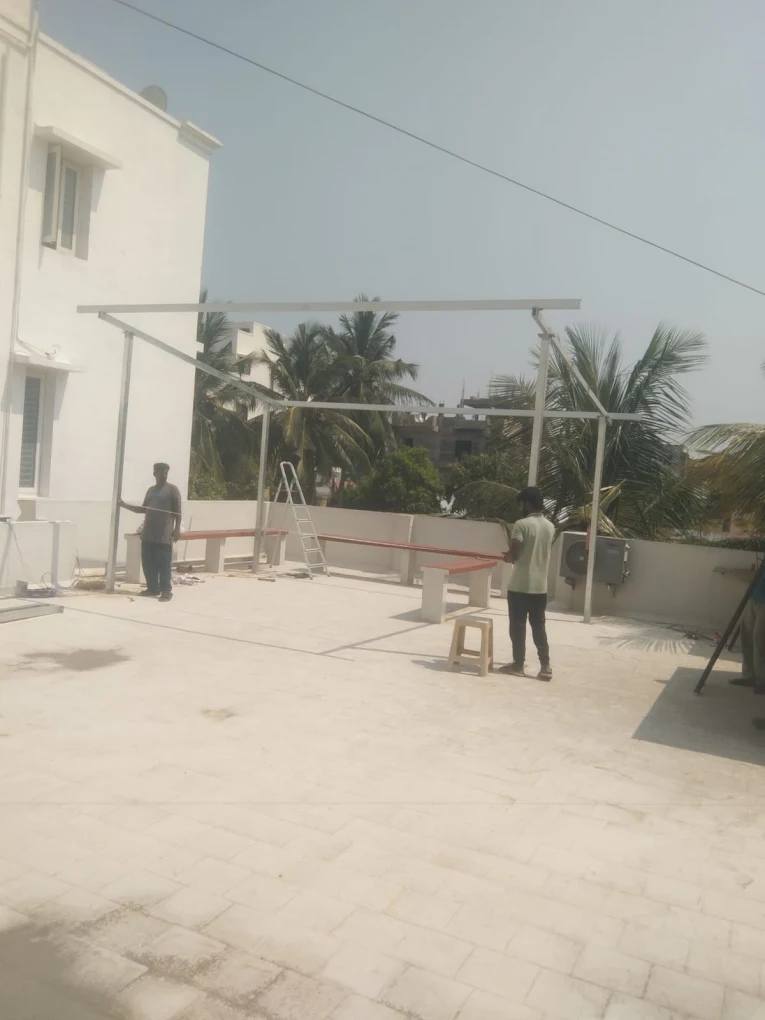
Read each quotation for what it includes and, more revealingly, what it does not. Common items that appear in one quote and quietly vanish from another:
A quote that is fifteen percent cheaper because it excludes earthing and protection devices is not cheaper at all. You will pay for those items eventually, either in cash or in problems.
Ask every supplier for the same four numbers: total system wattage, number and wattage of panels, roof area required, and expected monthly generation for your address. Then look at the panel efficiency and temperature coefficient, the inverter type and rating, and the warranty terms for panels, inverter, and workmanship separately — they are usually different lengths, and the workmanship warranty is the one people forget to ask about.
Your panels may carry a twenty-five year performance warranty, but a warranty is only worth as much as the ability to act on it. Reasonable things to check: how long they have been installing, whether you can visit or see photographs of completed local work, whether they offer maintenance after handover, and how they responded when you asked a difficult question during the site visit.
Reviews are useful, with one caveat — read the ones describing service two or three years after installation rather than the ones written the week the system was switched on. Anyone can be responsive during a sale.
Questions worth asking every supplier: Who performs the installation, your own team or a subcontractor? How are roof penetrations waterproofed? Is earthing included and will you show me the test readings? What is your response time for a service call in year three? What exactly is excluded from this price?
Once the quotes cover the same scope and comparable equipment, price becomes a fair basis for choosing. What rarely works out is treating the lowest number as the goal from the start. A rooftop plant is meant to run for two decades on a structure fixed to your roof; the saving from cutting corners on the parts you cannot see is small, and the cost of putting it right afterwards is not.
Our own approach is to quote the full scope in one place, which is why our installation service page lists both what is included and what is not. If you have quotations in hand and want a second opinion, send them across and we will talk you through the differences.
Keep reading
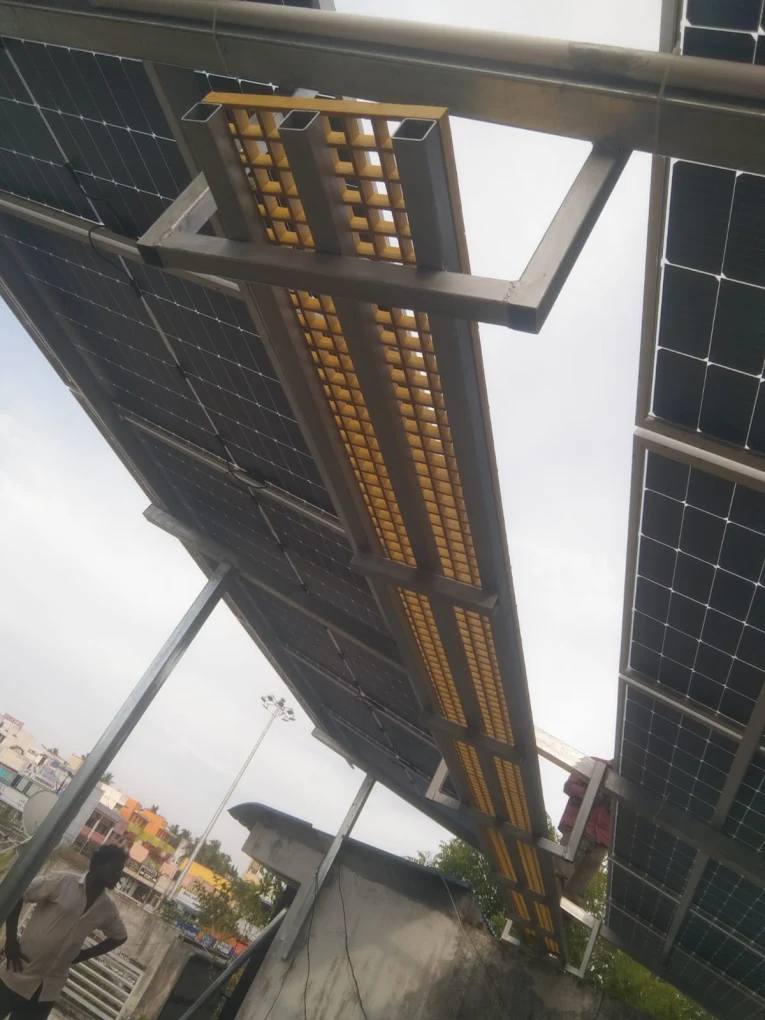
DCR modules are required for the rooftop subsidy. NDCR can look cheaper only if you give that subsidy up.
Read the article →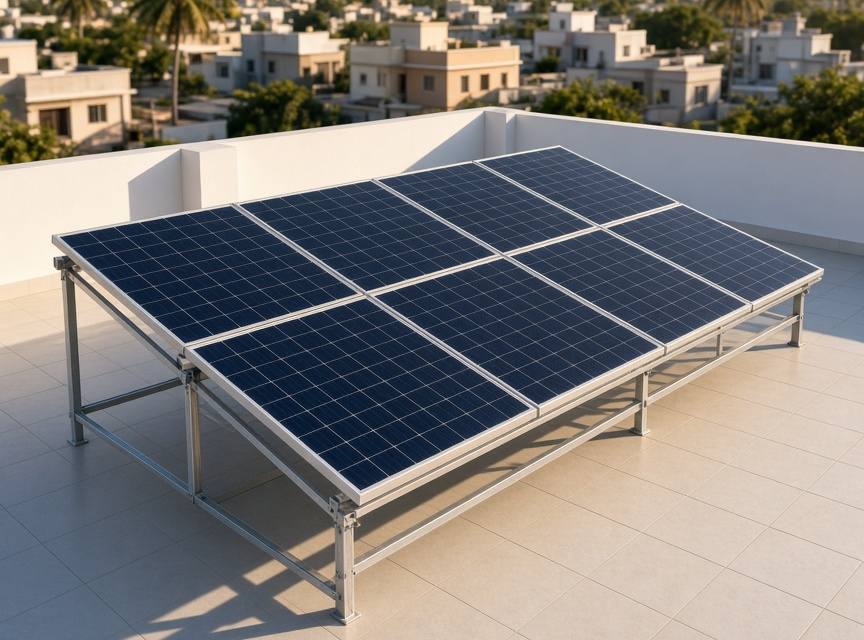
Heat, monsoon, TANGEDCO net metering, subsidy, and how to tell a real rooftop quote from a headline kilowatt price.
Read the article →
Colour tells you almost nothing about output or lifespan. Here's what to compare instead—efficiency, heat performance, warranty, and roof fit.
Read the article →Next step
Clear scope, itemised inclusions, and an honest generation estimate for your roof.