

01
Your side
The concrete on the owner's side of the party wall is the only place we draw a row.
Villa rows off the highway
Several houses here share one long roof line. Each house has its own slab, split by a party wall. From the lane it looks like one terrace. Modules stay on your side of that wall. The visit from Madipakkam is free.
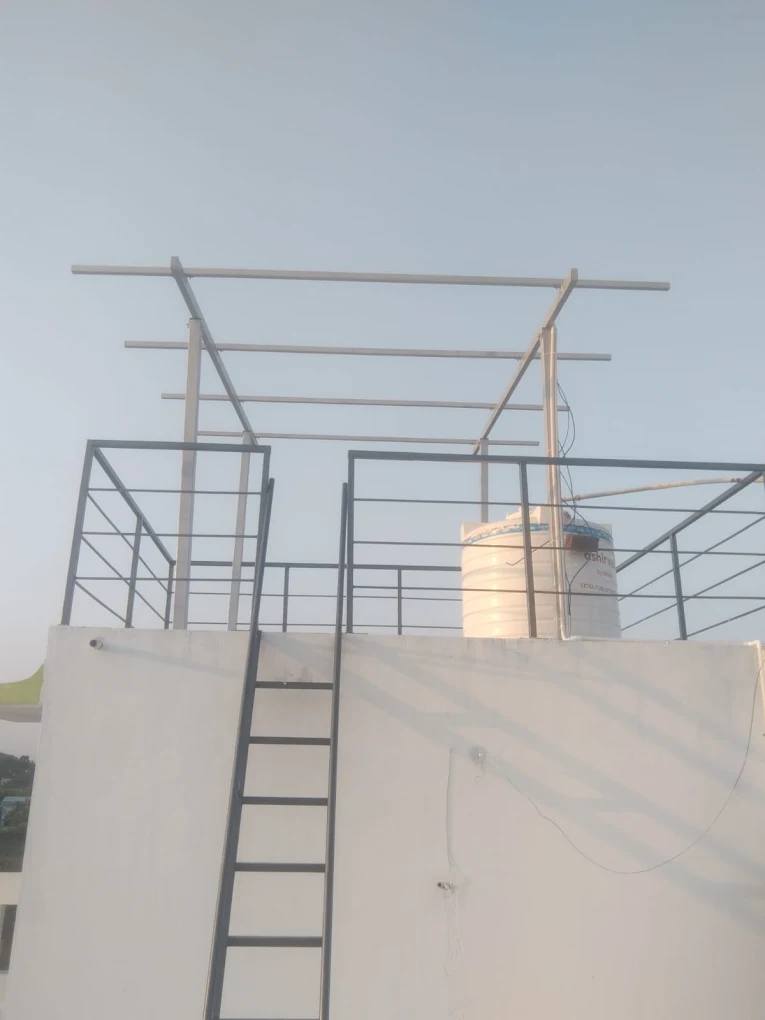
Where the next roof only looks joined
Rails stop at the party wall. They do not bridge onto the neighbour's slab, and the neighbour is not asked to sign a roof that is not theirs. We mark the open concrete on your side, leave the tank and a walkway, and see whether that area matches the daytime bill. A house that stands alone, with no shared wall, is an ordinary survey.
One slab used by two families, where both must sign, is the Kovilambakkam case. A narrow plot that holds only one row is the Adambakkam case. A car porch under the upper slab is the Kelambakkam case. An old sheet over the rooms is the Siruseri case. A neighbour's floor still rising is the OMR case. A flat cannot take the common roof of a large block. That is the Sholinganallur case. If the lane floods when the lake rises, delivery waits. That is the Keelkattalai case, not the first line here. City-wide module choice is on panels for a Chennai home.
Your side of the wallNo bridgeVisit from MadipakkamMarked before a count
The concrete on the owner's side of the party wall is the only place we draw a row.
Rails stop at the wall. The next villa's slab is not spare area, even when the roofs look like one.
On your slab, the tank stays and a path stays. The row uses what remains.
Central assistance needs cells and modules made in India. Eligible homes can receive up to ₹78,000. The amount follows the scheme on the day you apply.
Who it suits
Row villas and independent houses with a terrace in the household's name are the usual fit. A flat cannot claim the common roof of a large community. If the next plot's floor already rises above your parapet, that shade is marked the way the OMR page describes, before the wall question.
How the row is fixed once your slab is clear is on solar panel installation. Modules you already hold are labour from ₹3,000 per kW, materials excluded, on installation services. The Padur figure is on solar panels and prices in Padur. How the crew sets the row is on solar panels and installation in Padur. The subsidy gap is on panel and price. NDCR against DCR is in that guide before an import is confirmed.
Show your slab and the wall
Yes. The roof visit is free. A recent bill and a photo of your slab and the party wall, if there is one, are enough to start. No modules are ordered that day.
No. Rails stop at the wall. They do not bridge onto the next slab.
No. A house with no shared wall is a normal survey. The tank stays, and a walkway stays.
Yes. Cells and modules must be made in India. Eligible homes can receive up to ₹78,000, subject to the scheme on the day you apply. NDCR is only if that assistance has already been given up.
A free visit from Madipakkam. We mark your side, leave the next villa out, and note whether the plant should be DCR.
Request your free quote →