
NDCR vs DCR solar panels: which should you buy?
DCR modules are required for the rooftop subsidy. NDCR can look cheaper only if you give that subsidy up.
Read the article →Homeowners spend weeks comparing panel brands and inverter models, then give the installation itself about ten minutes of thought. It is an understandable order of priorities — the equipment is what you are buying, and it comes with a specification sheet you can read. But the equipment is only as good as the structure holding it, the cables connecting it, and the earthing protecting it. Those are the parts you cannot see from the ground, and they are where the difference between a plant that runs quietly for twenty years and one that gives trouble in year three usually lies.
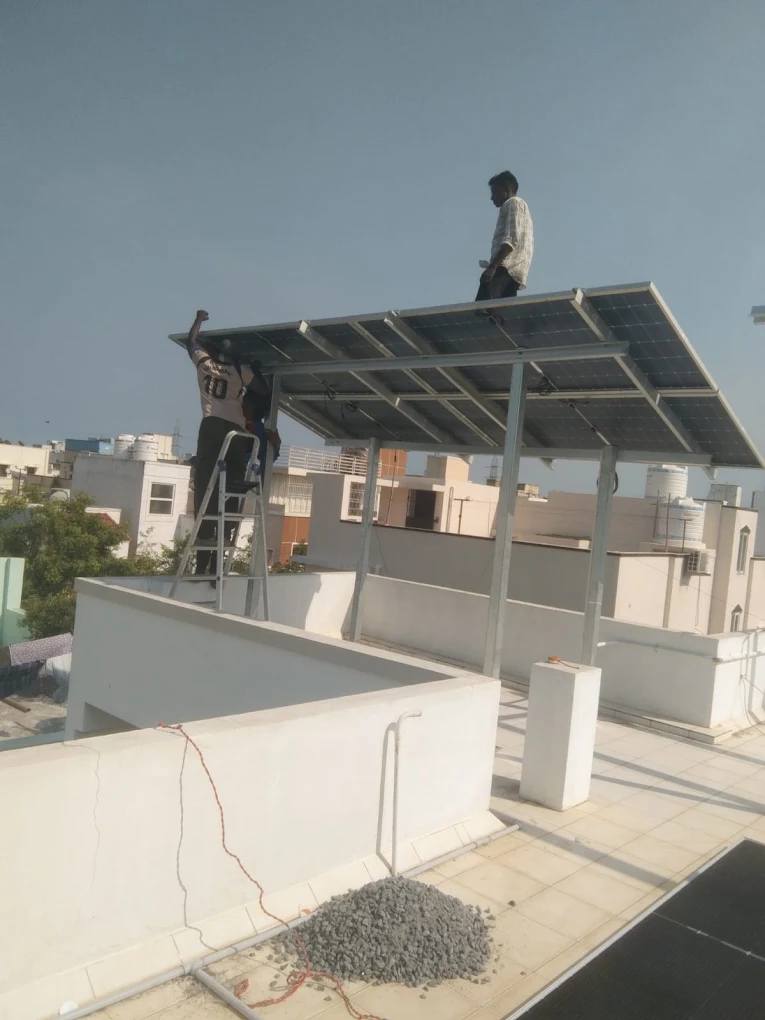
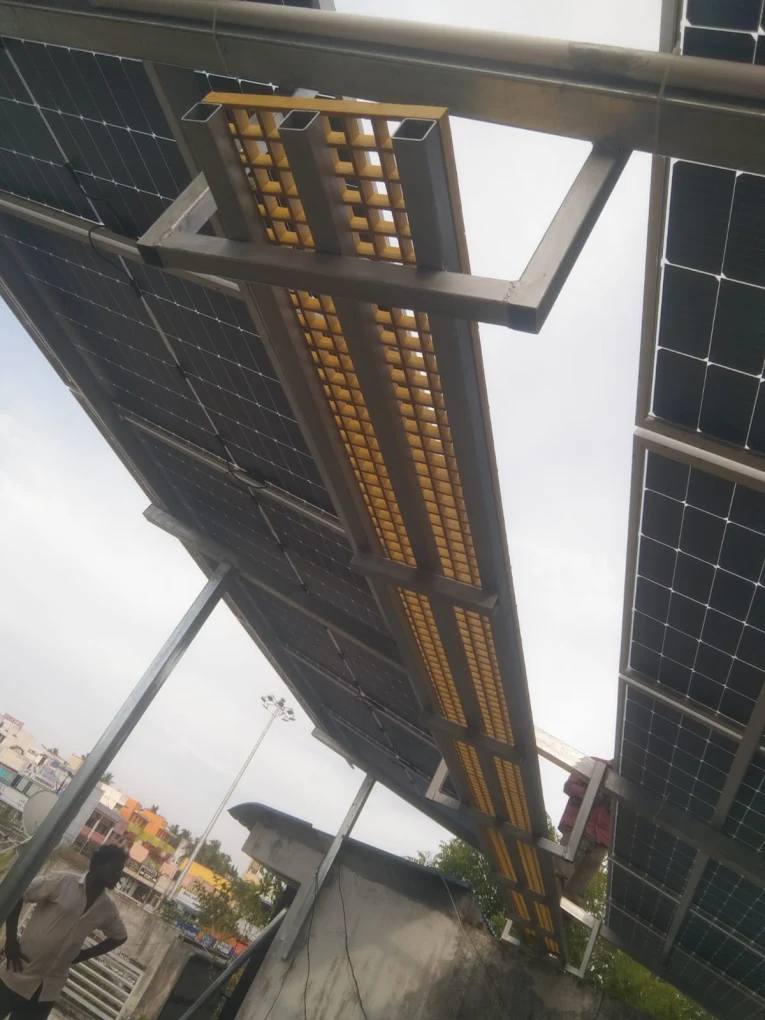
The structure carries the panels through every monsoon and cyclone season for the life of the system. Check the material and its corrosion protection — galvanised steel or aluminium, and how the cut ends have been treated, since an unprotected cut edge is where rust starts. Look at whether the members are properly sized rather than just adequate on a calm day, and whether every fastener is actually tightened rather than left finger-tight.
Where the structure meets the roof matters even more. Anchor points should be positioned deliberately, and every penetration into the slab needs proper sealing. A leak that appears in the first monsoon is almost always traced back to this step.
Panels should sit at a consistent tilt and alignment, clamped at the manufacturer's specified points and tightened to the specified torque. Over-tightened clamps can stress the frame; under-tightened ones let panels shift in wind. Neat alignment is not only cosmetic — it tells you the installer worked to a plan.
DC cables run in full sun for years, so they should be UV-rated, routed in conduit or trays rather than draped over the structure, and secured so nothing rubs against a metal edge. Loose cable is one of the most common causes of faults we attend later. Check that MC4 connectors are the correct matched type and properly crimped, that cable runs are as short as practical, and that everything is labelled clearly enough for the next technician to understand.
This is the item most often skimped on, and the one with real safety consequences. The array frame, structure, and inverter all need proper earthing, with an earth pit installed correctly and continuity actually verified rather than assumed. If lightning protection is part of your scope, confirm the arrestor is connected and the grounding is genuinely in place.
Your system should include appropriately rated DC and AC isolators, MCBs, and surge protection, mounted where they can be reached safely. These are what let a technician shut the system down and what protect your home when something goes wrong upstream.
Before you make the final payment, ask for: voltage and polarity test results, insulation resistance readings, earth continuity verification, inverter commissioning confirmation, monitoring set up and working on your phone, and photographs of the completed work including the parts now hidden from view.
A finished job means offcuts, packaging, and drill debris cleared away, sealed penetrations checked, and someone walking you through how to read your generation, what the inverter indicators mean, and who to call. If a company treats the handover as an afterthought, it is a fair signal of how they will treat a service call in two years.
This is the reasoning behind how our installation service is scoped: civil work, structure, panel and inverter installation, AC and DC wiring, earthing, testing, and commissioning are quoted as one job. When those items get split into extras, they are the first things to be trimmed when a quote needs to look competitive — and they are precisely the things you should not be trimming.
If you already have panels and an inverter and need them installed properly, or you want an existing installation inspected, call us on +91 9042517415.
Keep reading
DCR modules are required for the rooftop subsidy. NDCR can look cheaper only if you give that subsidy up.
Read the article →
Terrace constraints on south Chennai houses, net metering from here, and why a Medavakkam Main Road team still matters after switch-on.
Read the article →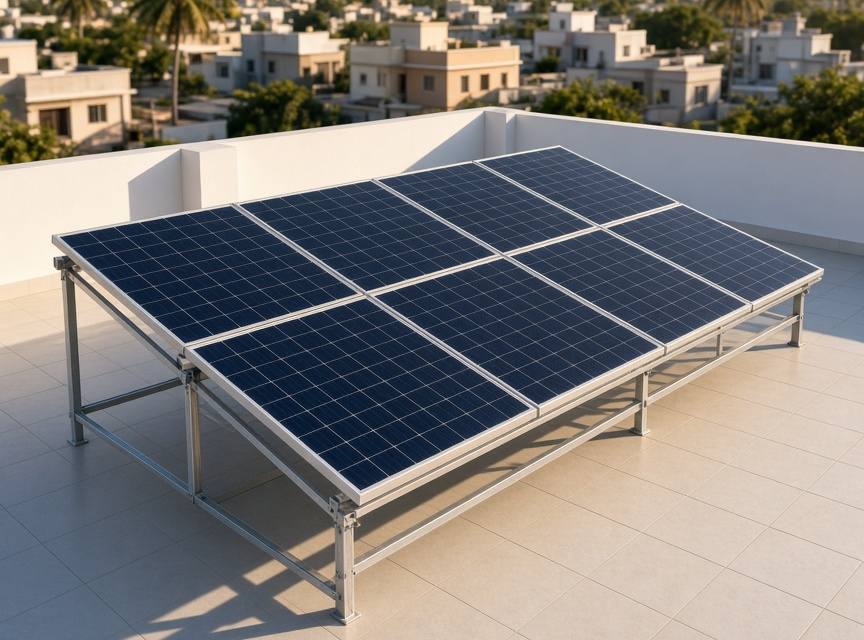
Heat, monsoon, TANGEDCO net metering, subsidy, and how to tell a real rooftop quote from a headline kilowatt price.
Read the article →Next step
Structure, wiring, earthing, testing, and commissioning handled as one scope by an experienced team.