

NDCR vs DCR solar panels: which should you buy?
DCR modules are required for the rooftop subsidy. NDCR can look cheaper only if you give that subsidy up.
Read the article →It is a natural assumption: add up the appliances, match the solar to them, done. But an appliance rating tells you how much power something draws while it is running, and solar sizing depends on something different — how many units your household actually consumes over a month. A one-tonne air conditioner running two hours a night and the identical unit running ten hours a night have the same rating and completely different energy footprints.
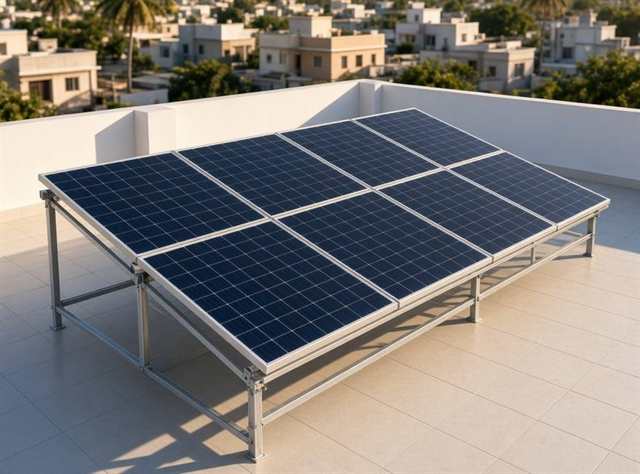
Your electricity bill states the units you consumed. That figure already accounts for how long everything runs, how often, and how efficient it is, which is why it is a far better starting point than any appliance list. Take a full year if you can. A Chennai household's consumption in April looks nothing like its consumption in December, and sizing to either extreme alone gives you the wrong answer.
As a planning figure, one kilowatt of well-installed, unshaded rooftop solar in Chennai produces roughly four to four and a half units a day averaged across the year. Some days are better, monsoon weeks are worse, and shading or dust pull the number down. So a 3 kW system lands somewhere in the region of 360 to 400 units a month, and a 5 kW system in the region of 600 to 675.
Say your bills average 500 units a month across the year. At roughly 4 units per kW per day, you would need somewhere around 4 kW to generate a comparable quantity over a month. Then the practical constraints come in:
The final recommendation is where those constraints meet your consumption — which is why it rarely comes out as a round number pulled from an appliance count.
Tell your installer about what's coming, not just what's here. A new air conditioner, an electric vehicle, or a son or daughter moving back home can change consumption substantially. It is far cheaper to size for it at the start than to extend a system later.
If a bigger system always paid for itself, sizing would be easy. It does not. Beyond the point where you are covering your own consumption, you are exporting surplus units, and export is generally worth less to you than the units you avoid buying. You also pay for panels, structure, and roof space you did not need. A system matched to your actual usage almost always gives a better return than one built to reach an impressive-sounding number.
The opposite error is quietly common. A system too small for the household covers a modest slice of the bill, and the fixed costs of the project — structure, labour, wiring, commissioning — are spread across fewer units. The per-unit economics get worse, not better.
The honest answer is that this needs your bills and your roof in front of someone. Bring a year of statements to a free site inspection and we will work through the arithmetic with you. If your roof is on the smaller side, our guide to fitting solar onto a compact terrace covers what is realistic.
Keep reading
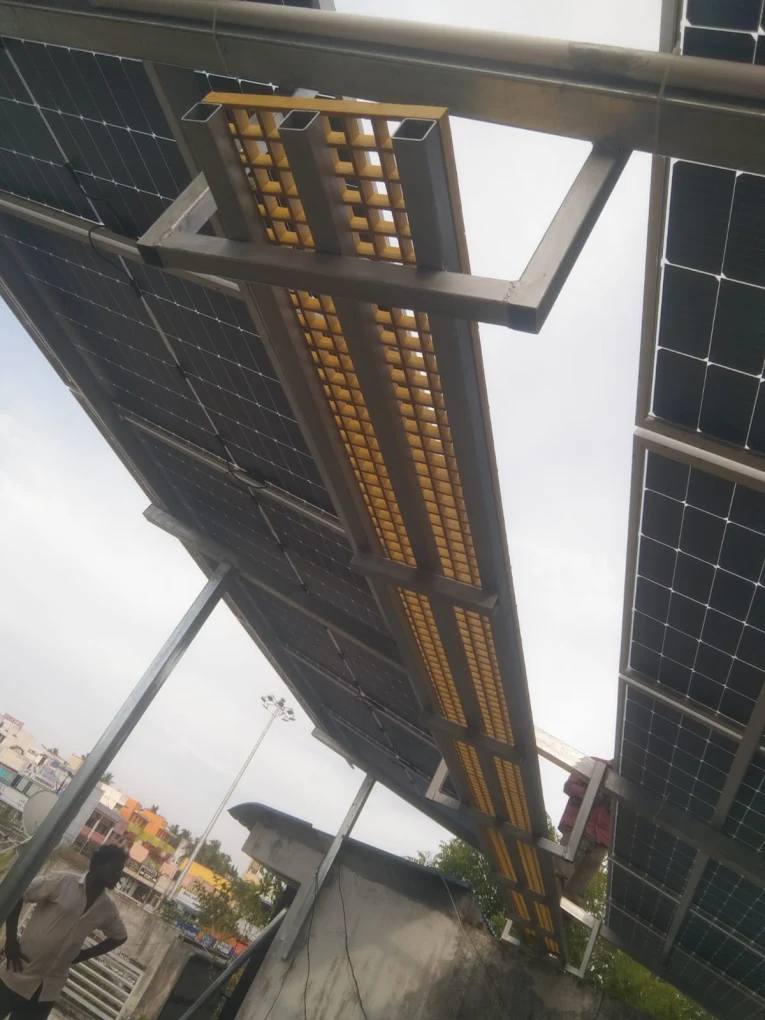
DCR modules are required for the rooftop subsidy. NDCR can look cheaper only if you give that subsidy up.
Read the article →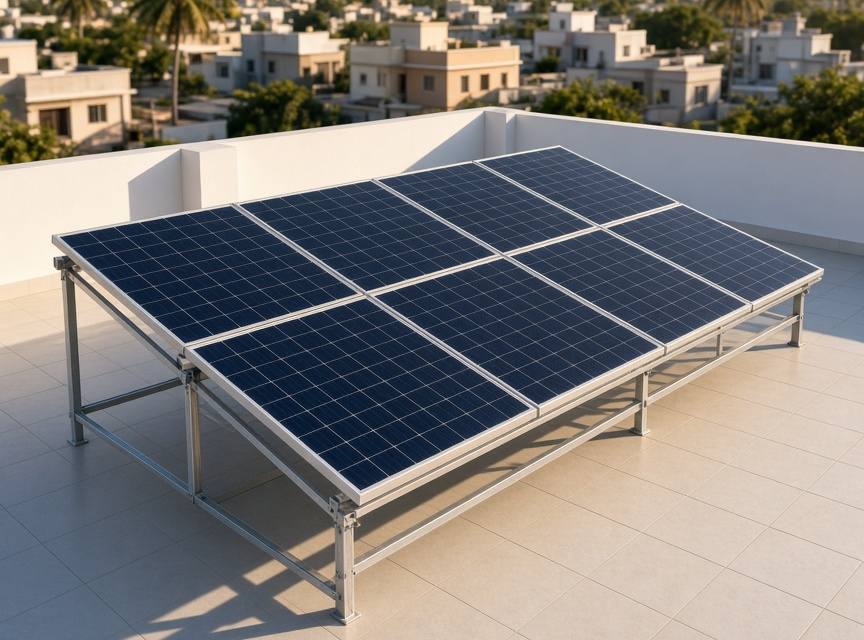
Heat, monsoon, TANGEDCO net metering, subsidy, and how to tell a real rooftop quote from a headline kilowatt price.
Read the article →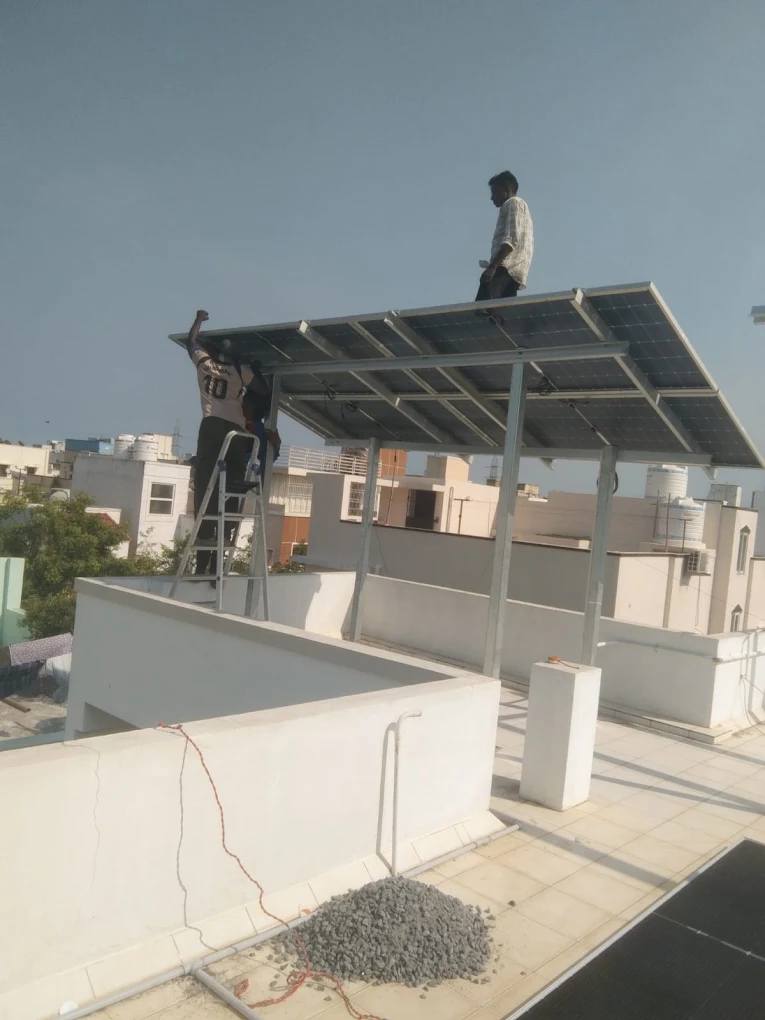
Terrace constraints on south Chennai houses, net metering from here, and why a Medavakkam Main Road team still matters after switch-on.
Read the article →Next step
Share your recent EB bills and we'll calculate the system size that actually matches your consumption.