
Small terrace? Here's how much solar you can fit.
How much area each kilowatt needs, how an elevated structure frees up the floor, and why a partial system still pays.
Read the article →A lot of Chennai homeowners rule themselves out of solar before they ever ask for a quote, because they picture panels sitting on a wide open terrace and their own roof looks nothing like that. A sloped tiled roof, a metal sheet roof over a workshop, a terrace already crowded with water tanks and potted plants — none of these are disqualifying. What matters is sunlight, structure, and space, in that order.
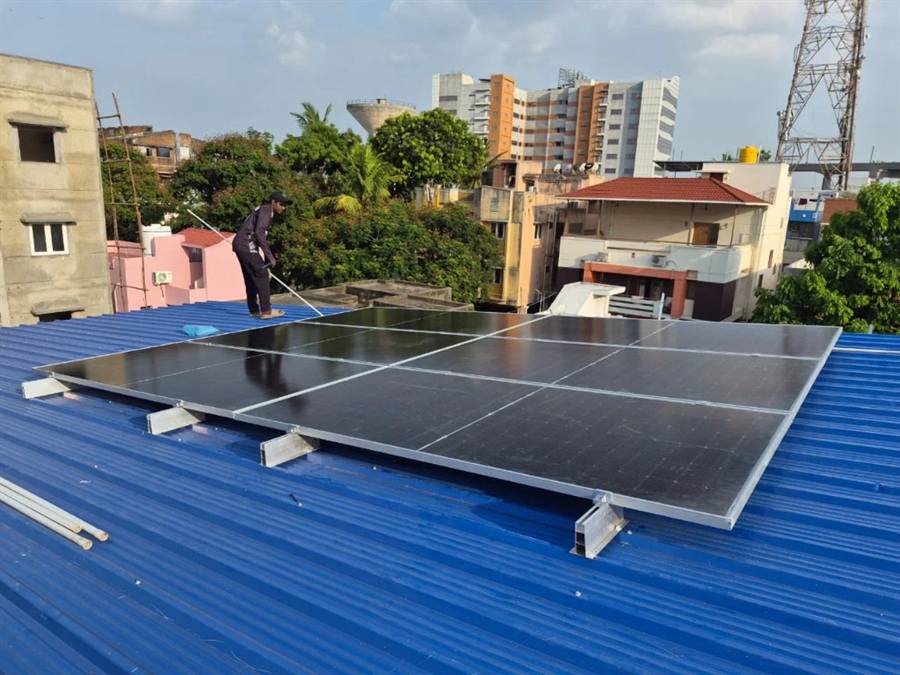
A sloped roof often works in your favour, because the tilt is already built in and rainwater keeps the panels cleaner. The installation needs roof-specific hooks and careful sealing at every fixing point, but it is routine work.
Common over garages, workshops, and extensions. Panels are clamped to the sheet profile using purpose-made clamps rather than drilled wherever convenient, which keeps the roof watertight. The photograph above is exactly this kind of installation.
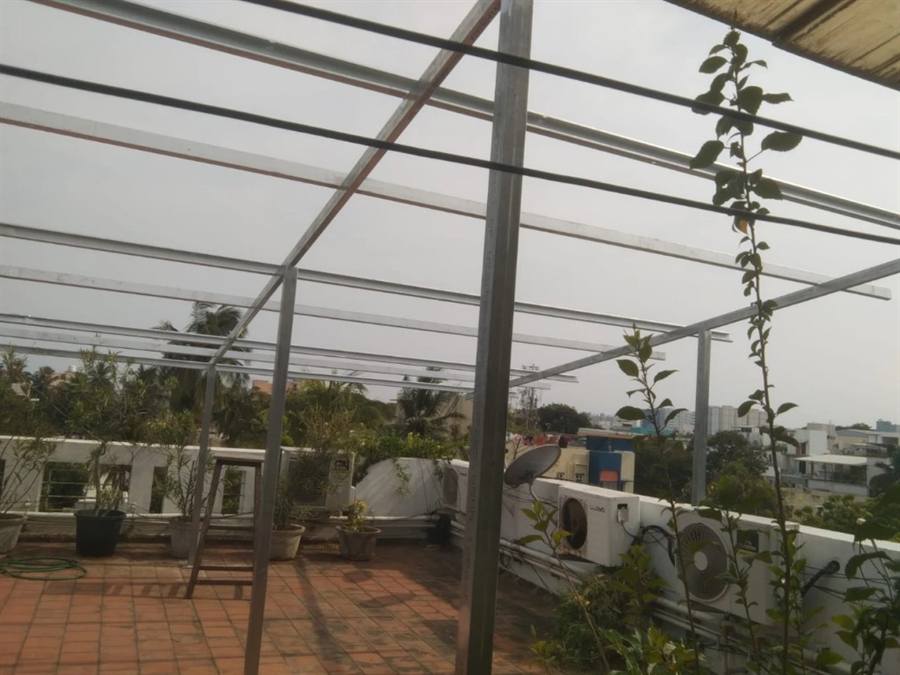
This is our most requested option in Chennai. The array sits on a raised galvanised structure, well above the floor, so you keep the terrace underneath for drying clothes, plants, or a seating area. You get the generation without losing the space, and the shade below is a genuine bonus in summer.
A parking area can carry the array while providing covered parking. It works particularly well where the main roof is shaded but the driveway is open to the sky.
If you have unused open land beside the house that stays unshaded, a ground-mounted structure avoids the roof question entirely and makes cleaning and maintenance far easier.
On waterproofing: every fixing into a roof is a potential leak if it is done casually. Proper anchor placement and sealing at each penetration is part of the job, not an optional extra — and it is worth asking any installer how they handle it before you sign.
Where space genuinely is limited, the answer is usually a smaller system rather than no system. A 2 kW array that covers a good share of your daytime consumption still reduces your bill every month, and higher-efficiency panels help you fit more capacity into the area you have.
If you are unsure whether your roof qualifies, that is precisely what a free site inspection is for. You can also read about the scope of our installation service, which includes the civil and structure work these mounting options need.
Keep reading
How much area each kilowatt needs, how an elevated structure frees up the floor, and why a partial system still pays.
Read the article →
DCR modules are required for the rooftop subsidy. NDCR can look cheaper only if you give that subsidy up.
Read the article →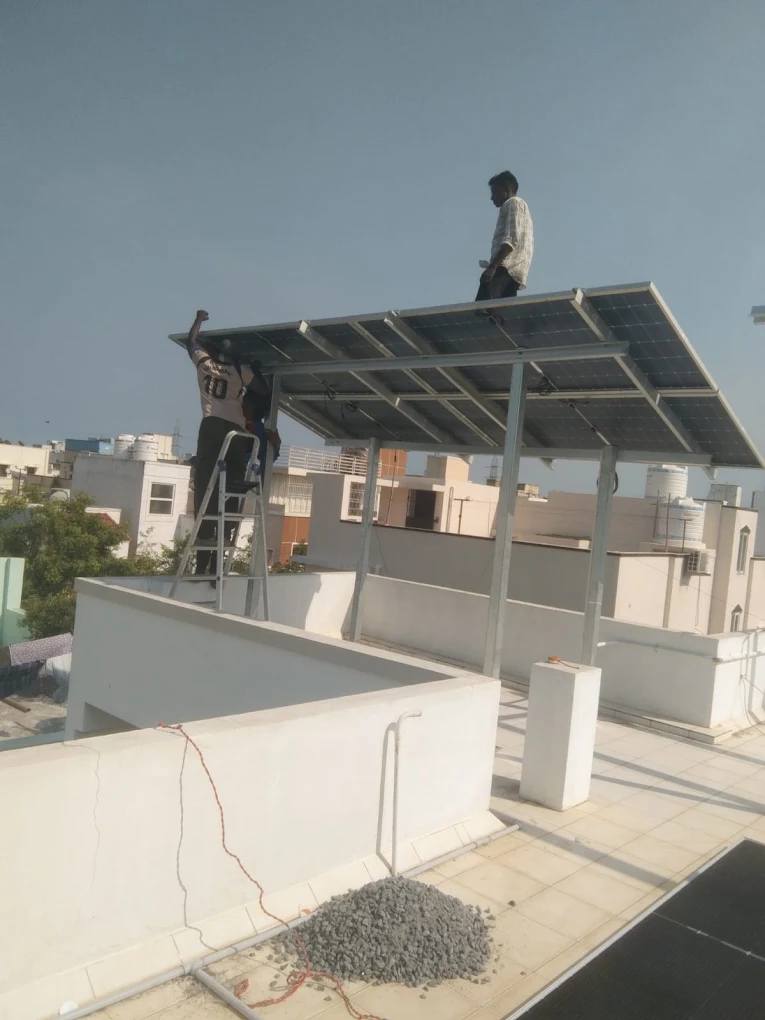
Terrace constraints on south Chennai houses, net metering from here, and why a Medavakkam Main Road team still matters after switch-on.
Read the article →Next step
We'll tell you what is possible, what capacity it can take, and what it would cost.