
On-Grid vs Off-Grid vs Hybrid Solar System: Which Is Better?
Most Chennai houses stay on the grid. On-grid does not run during a power cut. Hybrid adds a battery for selected circuits.
Read the article →Yes. While a heavy cloud sits over the roof and rain is on the glass, the plant makes less electricity than it does under a clear Chennai sky. The drop belongs to those hours. It is not a reason to treat the year as a loss, and it is not, by itself, a sign that a module has failed.
Panels need light. They do not need a dry afternoon. A dark noon in the monsoon is a different sky from a bright day in February. Cooler air can help a module that was hot, but on a stormy day the missing light matters more than the cooler glass.
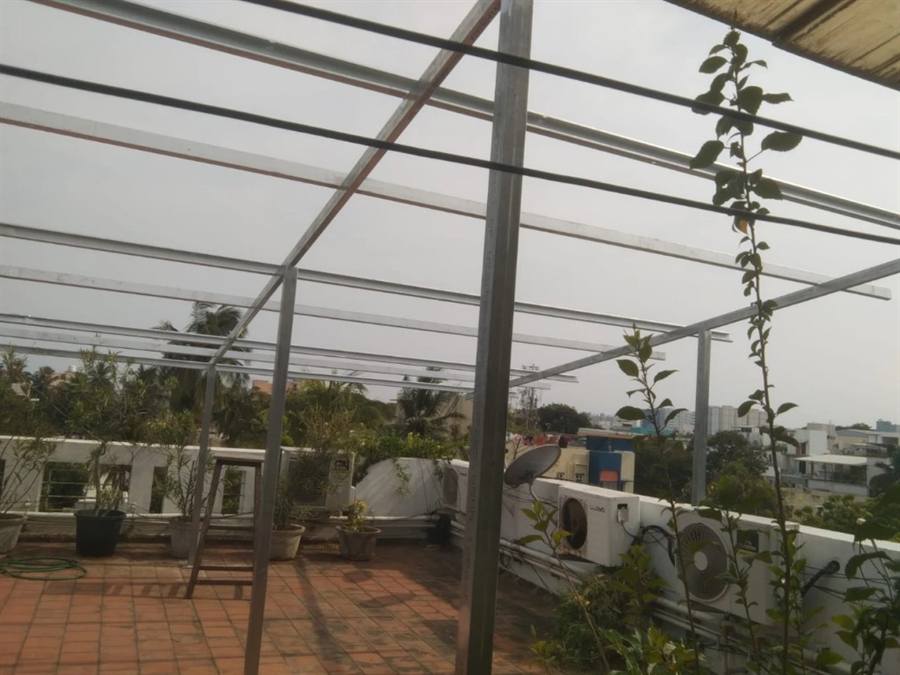
The modules convert the light that reaches the glass. Thick cloud cuts that light before a drop of rain touches the panel. Water on the surface takes a little more off while it is sheeting across the glass. When the shower eases and the cloud breaks, generation climbs again, sometimes within the same hour. Quiet during the downpour, busier when the sky opens: that pattern is the weather.
A percentage for “a rainy day” would be a guess. A brief shower under a bright sky is not an all-day storm. Two houses on the same street can see different curves if one roof is already in shade from a tank or the wall next door by mid-afternoon. Shade still decides more than the brand name on the module.
If the monitoring app is small during the rain and larger when the sun returns, the plant is doing what the sky allows. Compare that day with a clearer day in the same month before you treat it as a breakdown. A fault looks different: one row dead on a bright afternoon, a step down that does not recover when the cloud leaves, or a crack you can see on the glass.
What to do when a panel really is damaged is in one panel damaged? Do not panic. Rain on a sound module is not that case.
As a planning figure, one kilowatt of well-installed, unshaded rooftop solar in Chennai produces roughly four to four and a half units a day, averaged across the year. April is not December, and a monsoon week is not a clear week. Heat matters too. Modules lose some output as they warm up, so a datasheet wattage is not the units you will see at 2pm in May, and a stormy noon is not the units you will see when the sky is open.
That yearly average is the number that belongs next to a bill. A screenshot from a bright Sunday, or from the worst hour of a November storm, is the wrong one to size from. How capacity is decided starts from the units you already use across the year, not from an appliance count and not from one dark day.
Read the month, not the worst hour. A week of dark skies pulls that month down and leaves the rest of the year intact. If every clear week is also far below what the roof was supposed to do, look at shade, dirt on the glass, and whether the plant that was installed matches the plant that was drawn.
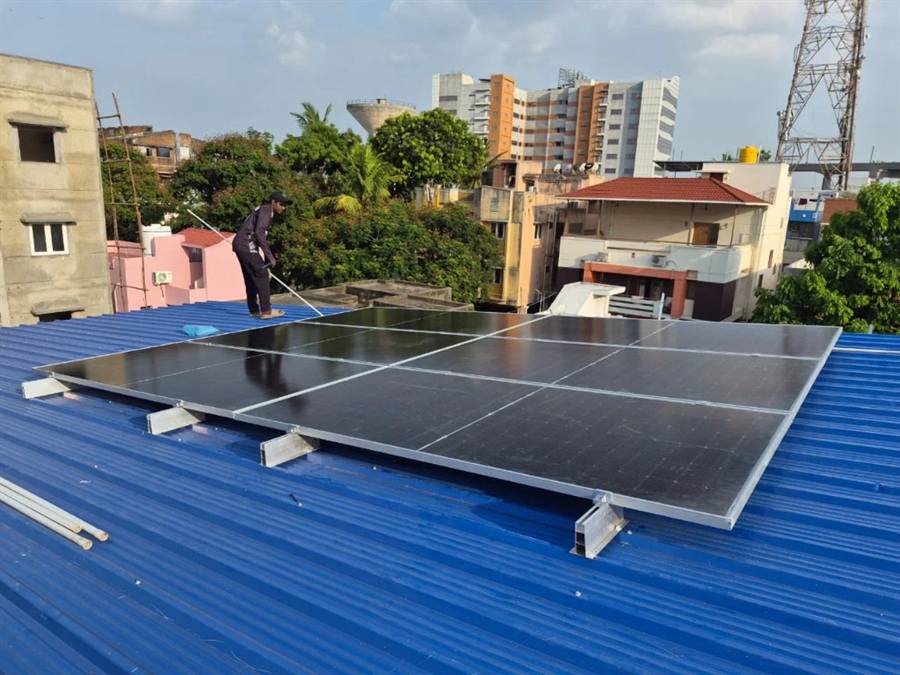
Chennai roofs collect dust, traffic film, and bird droppings. Loose dust does come off in a heavy shower, and the next clear day can look better than the dusty week before the rain. Droppings that have dried on the glass, and grime packed at the lower frame, stay put. Rain is not a substitute for a clean.
If generation on clear days is sliding and the glass looks filmed, that is a maintenance question. Panel cleaning is a separate visit. It is not something the monsoon is obliged to finish for you.
A module is built to live outdoors. Ordinary rain does not crack sound glass. After a hard monsoon week, the things worth looking at are about the install:
If the plant was surveyed and fixed properly, the roof should shed that water. If a quote never mentioned structure, cable routing, or where the inverter sits, the rain will show the gap. A full plant is still written after a free visit from the Madipakkam office. It is not a rate per panel, and it is not printed on this page.
Rain and an EB outage often arrive together. On a grid-tied plant the inverter switches off when the supply fails, so it does not feed a dead line. The lights go off with the street even if the cloud later breaks. Rain does not turn an on-grid system into a backup.
Which arrangement does what during a cut is set out in on-grid, off-grid, and hybrid. The short version: most Chennai houses stay on the grid, and a dark rainy evening does not change that design.
Yes. While the cloud is thick and rain is on the glass, a rooftop plant makes fewer units. Output rises again when the sky clears. In Chennai the monsoon is already inside the yearly planning figure of about four to four and a half units a day per kilowatt on an unshaded roof.
Ordinary heavy rain does not crack a sound module. Water becomes a problem when it sits at a cable entry, floods the place where the inverter is fixed, or finds a structure that was never anchored. Those are install issues, and they are checked on a visit.
A heavy shower washes loose dust off the glass. It does not remove bird droppings or grime that has stuck to the frame. Those still need a proper clean.
No. A grid-tied plant is meant to stay connected in the rain. It still switches itself off if the EB supply fails, so it does not send power into a dead line.
Keep reading
Most Chennai houses stay on the grid. On-grid does not run during a power cut. Hybrid adds a battery for selected circuits.
Read the article →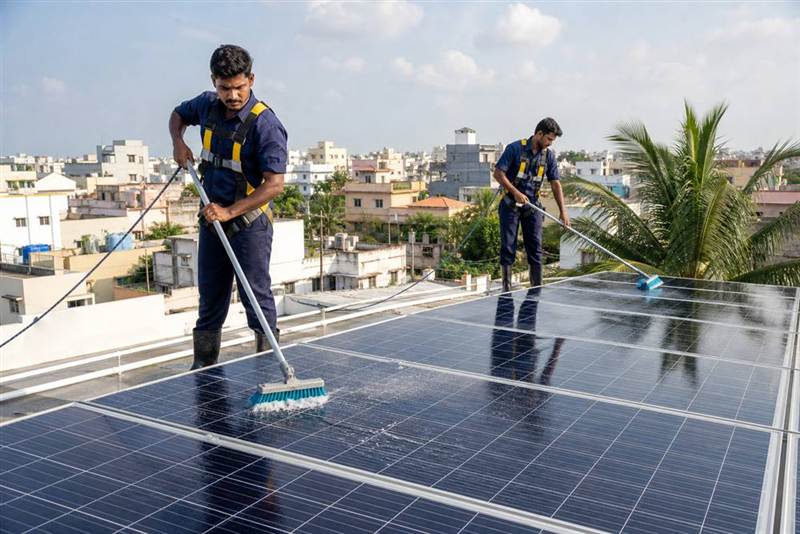
How the fault is diagnosed, what usually turns out to be the real cause, and what matters if a panel genuinely needs replacing.
Read the article →
Capacity comes from the units you consume, not an appliance count. A worked example using Chennai generation figures.
Read the article →Next step
Bring a recent bill. We’ll say what the roof did in clear weather and what a dark monsoon week is allowed to do, before a figure is written.