
Two ACs means 2 kW of solar? Not quite.
Capacity comes from the units you consume, not an appliance count. A worked example using Chennai generation figures.
Read the article →For many houses here, yes — if the roof is clear for most of the day and the electricity bill is still high after the obvious waste is already cut. It is not worth it on every terrace, and it is not worth it at every quoted price. The year does not change that test.
A rooftop plant in Chennai is usually grid-tied. The panels cover a share of what the house uses while the sun is up. After sunset the EB line still supplies the home. You do not give up the connection. Export, once a net meter is in place, is generally worth less to you than the units you avoid buying in the daytime. That is why “worth it” starts with the bill, not with a kilowatt number in an advertisement.
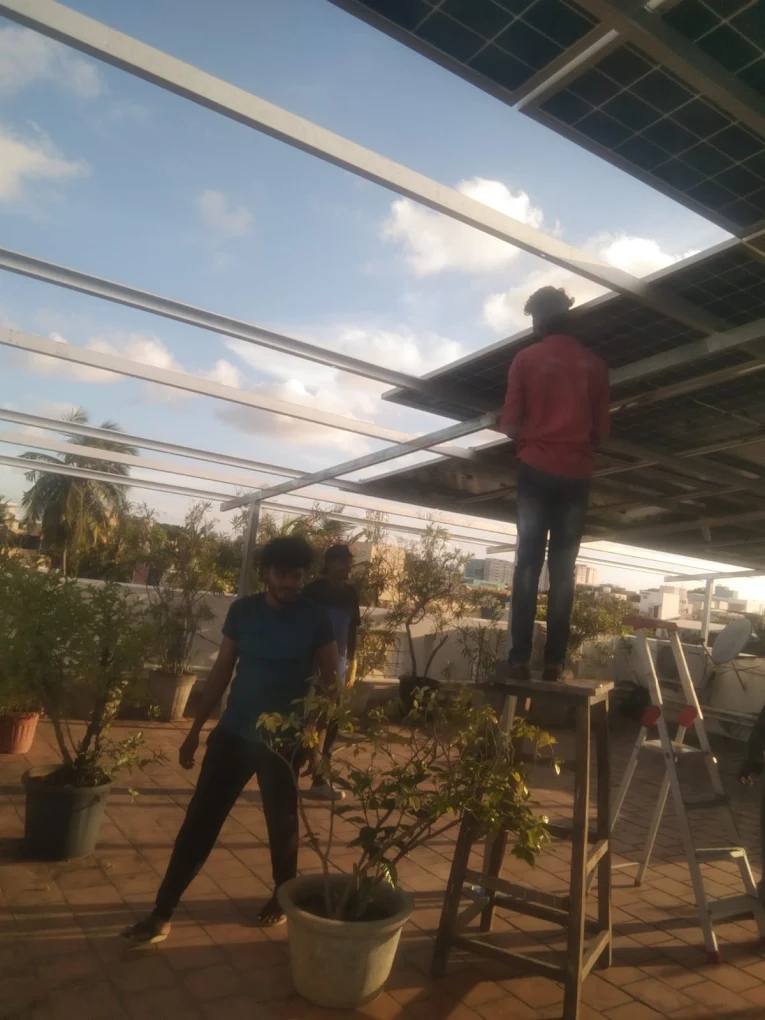
As a planning figure, one kilowatt of well-installed, unshaded rooftop solar in Chennai produces roughly four to four and a half units a day, averaged across the year. April is not December, and a monsoon week is not a clear week in February. Heat matters too. Modules on a terrace lose some output as they warm up, so a datasheet wattage is not the units you will see at 2pm in May.
Shade decides more than the brand name. An overhead tank, a stair cover, a neighbour’s wall, or the parapet can cut a row after mid-afternoon. A system that looks large on paper and sits in shade for three hours is often the one that disappoints.
Take a year of statements if you can. Note the units, not only the rupee total, because tariff slabs move. A house that runs an air conditioner through the afternoon, or has someone at home on weekdays, uses solar while it is being generated. A house that is empty from morning to night, and only loads the meter after dark, will export more and avoid less. Those are different returns, even on the same roof.
We size from that pattern. Two air conditioners do not automatically mean a 2 kW plant. The guide on how capacity is actually decided walks through the arithmetic. Going solar does not mean giving up the EB connection — night-time units still come from the grid.
The hardware is only half the project. A plant that generates but is not metered properly does not show up on the bill the way the quote described.
Most homes stay connected to TANGEDCO. The net meter is applied for, inspected, and changed on the utility’s timetable, which is not the same clock as the days the crew spends on the roof. Generation for the home can be explained at handover. Export, and the way the bill is presented, follow the meter change.
Eligible homeowners can receive a government subsidy of up to ₹78,000 when the modules are DCR and the file is approved. Amount and approval follow current scheme rules. That assistance is not a discount already printed on every quote. If a price only looks attractive because it assumes the subsidy, ask to see the subsidy as its own line. DCR modules are required for that central assistance. NDCR can look cheaper only if you give the subsidy up — the comparison is in NDCR vs DCR solar panels.
A payback year is not a fact until the roof is seen. The same kilowatts on a shaded terrace and on a clear roof with afternoon air-conditioning are different projects. We do not print a payback figure on this page.
A full plant is not the same job as fitting equipment you already own. Labour for fitting modules and an inverter that are already yours starts at ₹3,000 per kW. The equipment, the structure steel, the cables, and the papers sit outside that labour figure. If you are buying the plant, the figure is written after a free visit. It is not a rate per panel, and it is not printed here.
The visit is free and does not commit you. Bring a recent electricity bill. We look at roof area, the tank, the parapet, the stair, how the modules will be carried up, and where the cables can come down without a mess on the wall. Shade is measured on the roof. Access is part of the design.
From the Madipakkam office we install across Chennai. The same team that surveys the terrace is the team you can call after switch-on. Dust, heat, and the monsoon all sit on the same steel. What a free site inspection covers is the practical list, and what to expect before you sign follows the job from survey to net metering.
Installing solar panels is worth it in Chennai when the roof can see the sun, the household uses power while that sun is up, and the quote is a complete plant with the subsidy path written honestly. It is not worth it as a slogan, a payback printed in a message, or a kilowatt chosen from an appliance count.
For many houses, yes, when the roof is clear for most of the day and the bill is still high. It is not worth it on a shaded terrace, on a very small night-time bill, or on a quote that hides the structure and the paperwork. A full plant price is written after a free visit, not as a payback year on this page.
No. A typical Chennai home stays connected to TANGEDCO. Solar covers a share of daytime use. After sunset the EB line still supplies the house. The net meter is a separate step on the utility’s timetable.
Eligible homeowners can receive a government subsidy of up to ₹78,000 when the modules are DCR and the file is approved. The amount and the approval follow current scheme rules. The subsidy is not a discount already sitting in every quote.
There is no single payback year. It depends on the units you use in the daytime, the shade on the roof, the size that fits, and what the quote actually includes. We do not print a payback figure until the bill and the terrace have been seen.
Keep reading
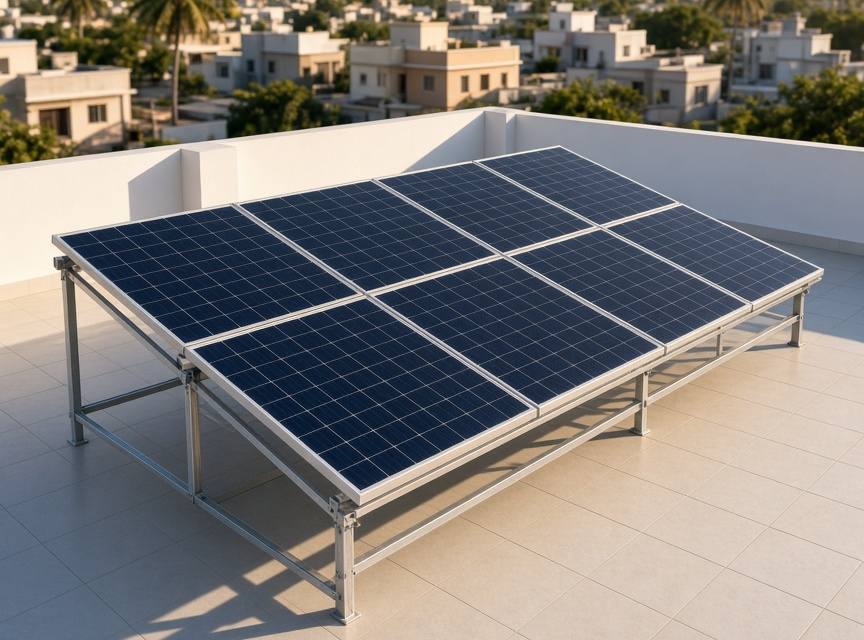
Capacity comes from the units you consume, not an appliance count. A worked example using Chennai generation figures.
Read the article →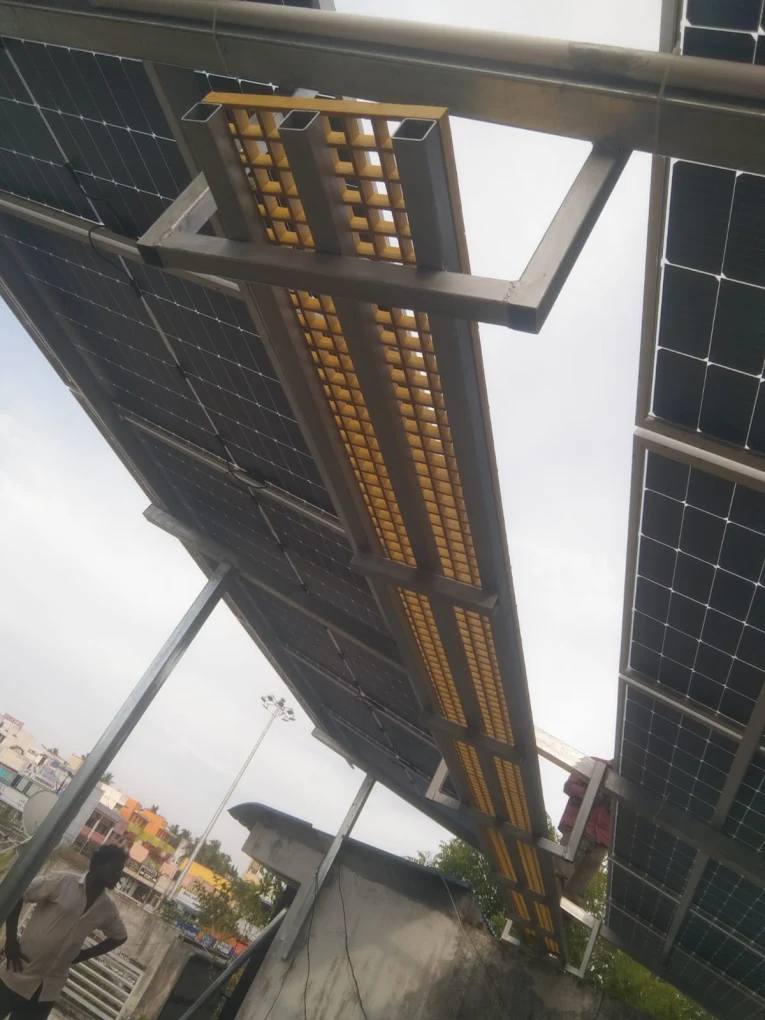
DCR modules are required for the rooftop subsidy. NDCR can look cheaper only if you give that subsidy up.
Read the article →
Heat, monsoon, TANGEDCO net metering, subsidy, and how to tell a real rooftop quote from a headline kilowatt price.
Read the article →Next step
Bring a recent bill. We’ll say what the roof can hold and whether the units support a plant before a figure is written.