
Does Heavy Rain Affect Solar Panel Electricity Generation?
Output falls while the cloud is thick, then recovers when the sky clears. A dark monsoon day is already inside the yearly figure.
Read the article →Solar panel service is the care of a plant that is already on the roof. It is the clean, the inspection, and the note of what is loose, filmed, or quiet. It is not a quote for a new system, and it is not a promise that the lights will stay on when the EB supply fails.
Chennai gives a rooftop two kinds of weather that both show up in the units. Dust and droppings sit on the glass for weeks. Then a hard rain washes the loose film off and leaves silt, leaves, and the odd puddle at a cable entry. A service visit is how you tell those apart from a real fault.
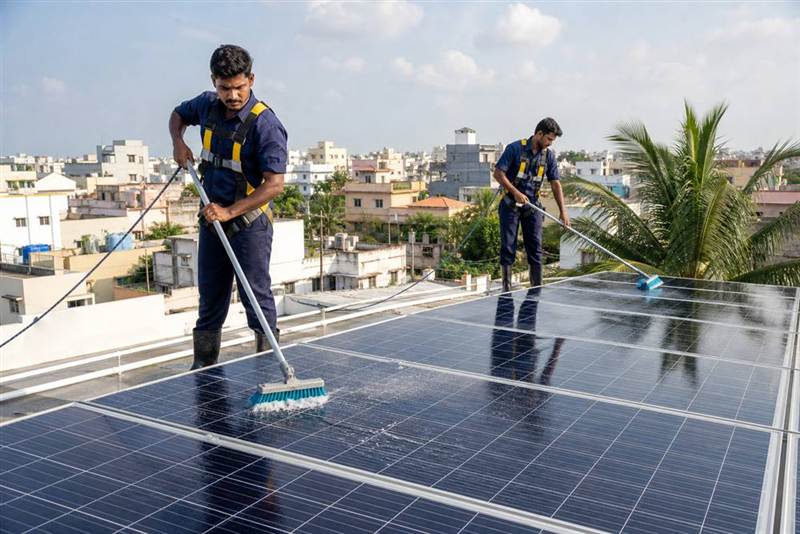
The glass is the part you can see from the terrace. Dust, traffic film, bird droppings, and leaves cut the light before the module can turn it into units. A proper clean uses a non-abrasive wash and purified water, then a look for stains that a hose would smear. Rain does some of the loose dust. It does not finish droppings that have dried on, or grime packed at the lower frame. That difference is spelled out in how heavy rain changes generation.
The rest of the visit is the part a photo of shiny panels does not show. Technicians look at the frames and the backsheet, cracks and moisture, then the structure: nuts, rails, anchors, and rust. Cables are checked for sun damage and for connectors that have worked loose. Earthing and the lightning arrestor are part of the same pass, as are the isolators, breakers, and surge protection in the board. The inverter is cleaned around the fans and vents, and its error log is read. Voltage and current are measured so a weak string is not left as a guess. The app is checked too. A plant that is generating and an app that has been offline for a month are different problems.
Shade and birds belong on the same list. A tree that was clear at installation can cover a row two years later. Nesting material and droppings under the array are not a cleaning afterthought. The visit ends with a record: what was done, what was found, before-and-after photos, and what, if anything, should be repaired next.
Service keeps a working plant honest. It does not redesign the roof, and it does not replace a module that is cracked. If one row is dead on a bright afternoon, start with what to do when a panel is damaged.
Panel cleaning is priced by the size of the system, not by a rate per panel:
An annual maintenance contract saves 25% on every cleaning visit. That is scheduled cleaning through the year at the lower service price. It is not a new plant, and it is not a blank cheque for parts.
Replacement parts and optional tests sit outside that cleaning rate. A damaged connector, a surge device, bird mesh, thermal imaging, or a panel that has to be changed are named when the inspection finds them. They are not silently folded into the per-kW clean. The full list of what the maintenance visit covers, and how to book a Monday-to-Saturday appointment, is on the panel cleaning and AMC page.
Book when clear-day output is sliding, or when you can see the film on the glass from the stairhead. A week of monsoon cloud is not that signal. As a planning figure, one kilowatt of well-installed, unshaded rooftop solar in Chennai produces roughly four to four and a half units a day, averaged across the year. A dark noon will be under that. A clear week that stays under it, on a roof that used to do better, is the week to call.
There is no single month that fits every house. A roof under a pigeon path needs a different rhythm from a roof that only takes city dust. We would rather see the glass and the bill than print a calendar.
Wait, and do not pay for a clean, if the only symptom is a power cut. On a grid-tied plant the inverter switches off when the EB supply fails, so it does not feed a dead line. Service does not change that. It keeps the plant able to generate when the sun and the grid are both there. Backup during a cut is a battery decision, covered in on-grid, off-grid, and hybrid.
If the terrace is still empty, you do not need a cleaning rate. You need a survey: shade, structure, where the inverter sits, and the units on the bill. That plant figure is written after a free visit. It is not printed here, and it is not the cleaning price above.
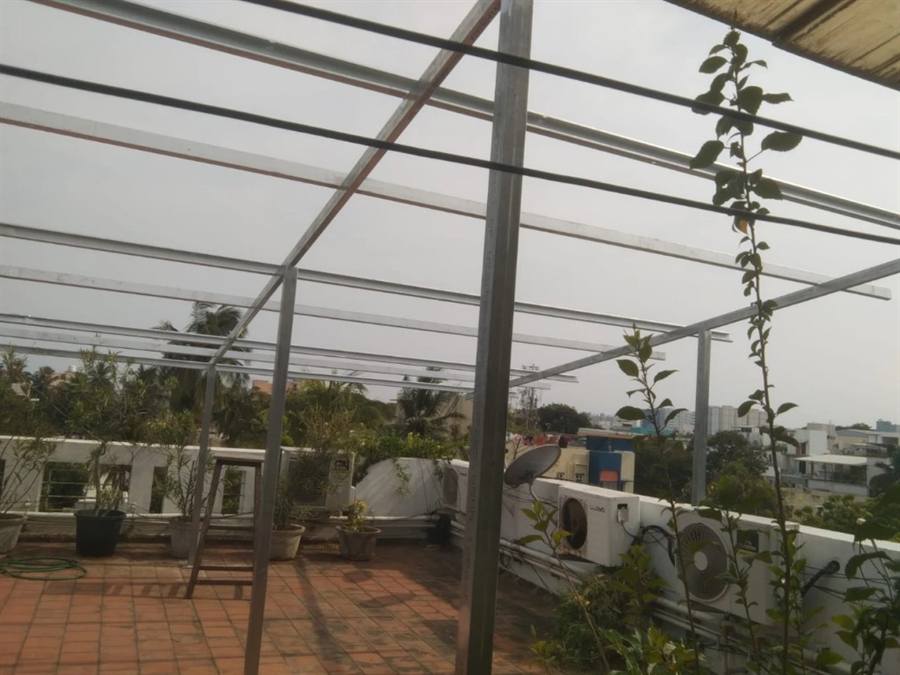
If a plant is already up and was never anchored properly, service will find the loose bolts and the open cable entry. It will not pretend a wash repairs a structure that was skipped. What should have been checked at installation is in the quality checklist: structure, wiring, earthing, and protection. A service visit is the later reading of those same points.
Call +91 9042517415 and say whether you want a clean, a health check, or both. The office is in Madipakkam, and the visit is on your roof.
A service visit cleans the glass and checks the rest of the plant: frames, structure, cables, earthing, the inverter, and whether the monitoring app is reporting. Cleaning is priced by system size. A new rooftop plant is a different job, and that figure is written after a free visit.
Up to 3 kW is ₹750 per kW. Up to 5 kW is ₹600 per kW. Up to 10 kW is ₹500 per kW. Above 10 kW is ₹450 per kW. An annual maintenance contract saves 25% on every cleaning visit. Replacement parts and optional tests are not inside that cleaning rate.
Book a visit when clear-day output is sliding or the glass looks filmed with dust or droppings. Rain washes loose dust and does not replace the clean. There is no single month that fits every roof.
No. A grid-tied inverter still switches off when the EB supply fails. Service keeps the plant able to generate when the sun and the grid are both there. It does not add a battery.
Keep reading
Output falls while the cloud is thick, then recovers when the sky clears. A dark monsoon day is already inside the yearly figure.
Read the article →
How the fault is diagnosed, what usually turns out to be the real cause, and what matters if a panel genuinely needs replacing.
Read the article →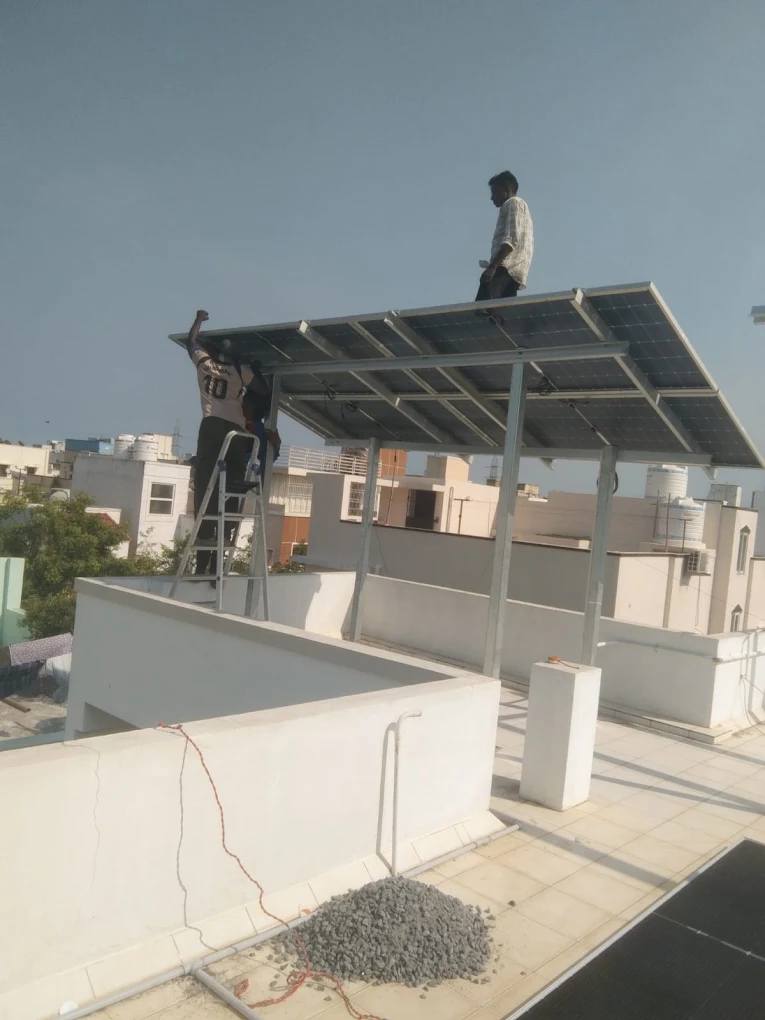
The parts you can't see decide how a system performs. A homeowner's checklist for structure, wiring, earthing, and protection.
Read the article →Next step
Say whether you need a clean, a health check, or both. Appointments run Monday to Saturday.